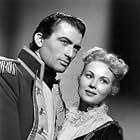
Captain Horatio Hornblower stars Gregory Peck in what at the time may have been the highest profile role of his career. Today, of course, we recall him more for two other roles, as Atticus Finch in the 1962 adaptation of To Kill a Mockingbird and as Captain Ahab of the whaler Pequod in the 1956 John Huston and Ray Bradbury adaptation of Herman Mellville’s Moby Dick.
The Hornblower film was in part adapted for the screen by the original author of the Hornblower novels, C. S. Forester, from the first three books in the series, published in 1937 and 1938, The Happy Return (originally titled Beat to Quarters in the UK), A Ship of the Line, and Flying Colours. These books, as with several of the Aubrey-Maturin novels by Patrick O’Brian, draw in part on events from the actual life and career of Admiral Thomas Cochrane.
The film rights were originally acquired by Warner Bros. with the intent that the resulting film should star Errol Flynn, someone we shall see in the second set of waterborne adventure films I hope to share with you here.
| Director | Raoul Walsh |
| Starring | Gregory Peck |
| Links | IMDB. Rotten Tomatoes score: 100. TMDB: Captain Horatio Hornblower. JustWatch streaming availablity. |
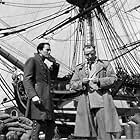
Hornblower was shot primarily in the UK but shot on dry land, and reused a set constructed for Disney’s 1950 Treasure Island (which is also upcoming). The film also shot on the actual flagship of Admiral Horatio Nelson, HMS Victory, long preserved as a museum ship in Portsmouth harbor, where it remains open to the public to this day. Another full-scale real sailing ship was also employed, the Marcel B. Surdo, which we shall see again in the next movie in this series, HMS Defiant.
The film was released to reasonably good reviews and was a commercial success. Contemporary reviewers appear enthusiastic for the film and within the maritime fiction enthusiast community it is quite highly regarded. This may simply be due to it being an adaptation of the Hornblower books that involved Forester, because to my eyes the film was pretty dull and includes some cringe-inducing greasepainted villains.
Director Raoul Walsh started in silents and be likely best known today for the Humphrey Bogart picture High Sierra and the James Cagney feature White Heat. He would go on to make a couple of other nautical action films, 1952’s Blackbeard the Pirate and 1953’s Sea Devils, and finished his fifty-one year career in 1964 with the Western A Distant Trumpet.
 7.3
7.3


Photos




See all photos >>